
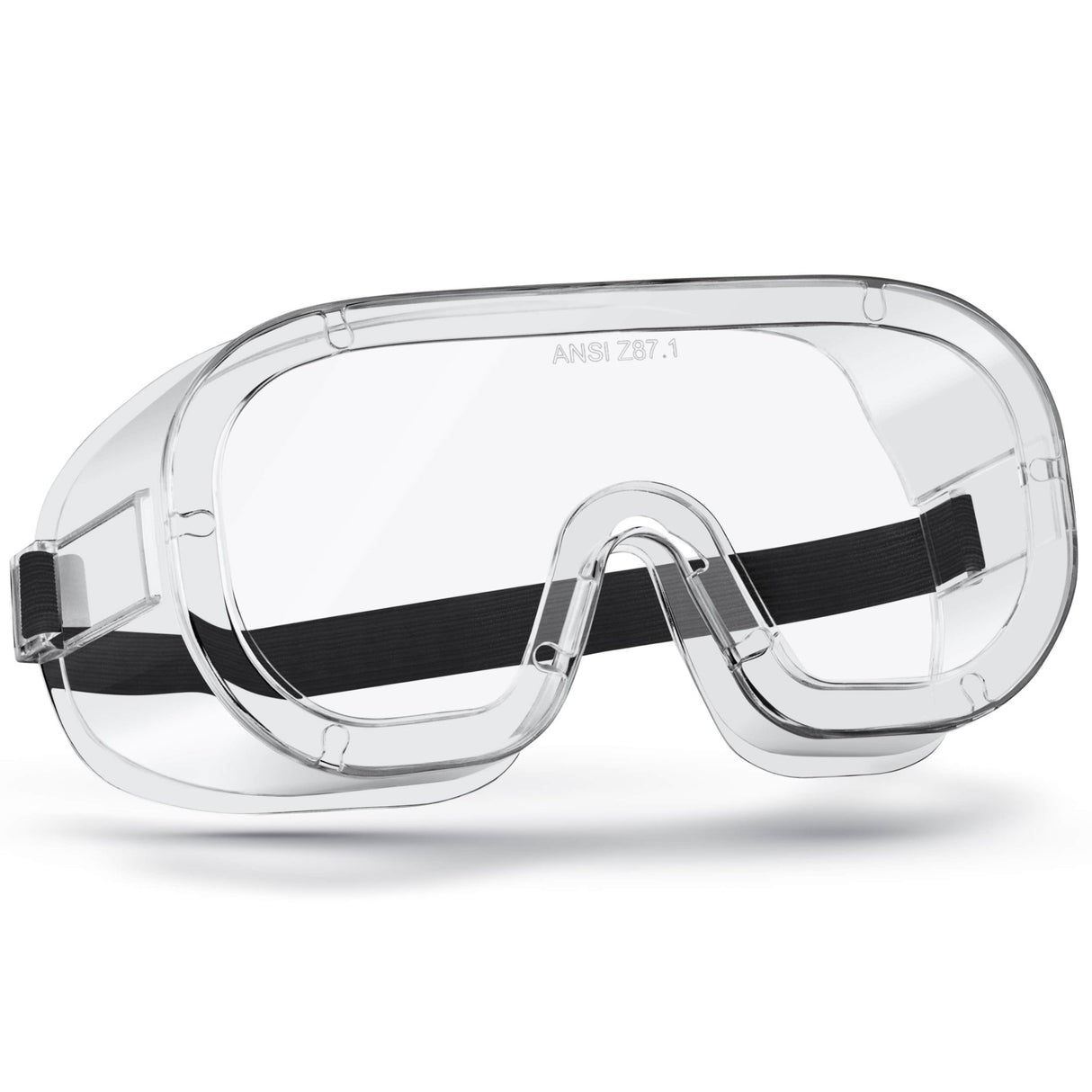
Lab Safety Goggles Over Glasses: Choosing and Using Them Safely
If you wear prescription glasses, you may need eye protection that fits comfortably over them in the laboratory. Over-the-glasses safety goggles—often labelled “OTG”—are designed to provide a protective barrier while leaving room for ordinary spectacles underneath. Choosing the right pair matters: goggles that pinch, fog up or leave gaps may not provide the protection the task requires.
Why ordinary glasses are not enough
Prescription spectacles can help you see clearly, but they are not usually designed to protect your eyes from chemical splashes, dust, flying particles or other laboratory hazards. Even glasses with impact-resistant lenses may leave the sides and areas above and below the frames exposed. Do not treat everyday spectacles as a substitute for approved eye protection unless they are specifically rated for the hazard.
What to look for in over-glasses goggles
- A suitable fit: The goggles should sit securely over your spectacles without pressing them into your face or forcing them out of position. Check that the frames do not create large gaps around the edges.
- Protection matched to the task: Select goggles for the risks identified in your laboratory’s risk assessment. Chemical splash, dust and impact hazards may require different designs.
- Appropriate coverage: A close-fitting design can help protect against splashes and particles. Ventilation features may improve comfort, but the type of ventilation must be suitable for the hazard; vented goggles may not be appropriate where liquid splash protection is needed.
- Clear vision: You should be able to see your work without distortion or obstruction. Check that the goggles do not interfere with your prescription lenses or peripheral vision.
- Compatibility with other PPE: Make sure the goggles work alongside any face shield, respirator or other protective equipment you need to wear.
- Suitable product markings: Buy from a reputable supplier and check the manufacturer’s instructions and the applicable UK conformity marking and safety standard for the product.
Try them on before starting work
Put the goggles on over your spectacles and adjust the strap so they remain in place without being uncomfortably tight. Move your head and look in different directions to check that the goggles do not slip, press against your glasses or restrict your view. If the fit is poor, try another model rather than removing your spectacles or relying on a loose fit.
Where goggles cannot be fitted securely over your glasses, ask your supervisor or safety officer about alternatives. Depending on the task and workplace arrangements, these may include prescription safety spectacles or a prescription insert designed for compatible goggles. A face shield may provide additional protection, but it does not necessarily replace goggles.
Prevent fogging and keep lenses clear
Fogging can make it difficult to see hazards and may tempt you to lift or remove your goggles. Choose a model with suitable anti-fog features, and use only cleaning products approved by the manufacturer. Allow goggles to dry fully before use. If they keep fogging, speak to your supervisor about a better-fitting or more suitable option—never work with obscured vision.
Care, cleaning and replacement
Inspect your goggles before each use. Do not use them if the lenses are cracked, badly scratched, clouded or otherwise damaged, or if the strap and frame no longer hold them securely. Clean and store them according to the manufacturer’s instructions, keeping them protected from contamination and damage. Replace them when their condition or fit can no longer be relied upon.
Make eye protection part of the risk assessment
Over-glasses goggles can be a practical choice for people who wear spectacles, but no single design suits every laboratory task. Follow your workplace risk assessment, local safety procedures and the manufacturer’s guidance. If you are unsure which goggles to use, ask your supervisor or health and safety representative before beginning the work.
5 Tips for Wearing Lab Safety Goggles Over Glasses
- Choose goggles designed to fit comfortably over your glasses.
- Check they seal well around your eyes without pressing on your frames.
- Use indirect-vent goggles to help protect against splashes.
- Keep lenses clean and clear to prevent fogging.
- Inspect goggles before use and replace any that are cracked or scratched.
Choose goggles designed to fit comfortably over your glasses.
Choose safety goggles specifically designed to fit over prescription glasses, rather than trying to squeeze standard goggles over them. A comfortable, secure fit should leave your spectacles in place without pinching, slipping or creating gaps around the goggles. Try them on before starting work and check that you can see clearly and move your head freely. If they do not fit properly, ask your supervisor about a suitable alternative.
Check they seal well around your eyes without pressing on your frames.
Check that your safety goggles fit closely around your eyes, with no obvious gaps that could let splashes or particles in. They should sit comfortably over your glasses without pressing on the frames, shifting them out of place or making it difficult to see. If the fit is poor, try another style and ask your supervisor for advice before starting work.
Use indirect-vent goggles to help protect against splashes.
Choose indirect-vent goggles when working where liquid splashes are a risk. Their vents are designed to allow airflow while reducing the chance of splashes reaching the eyes; however, protection varies by product, so check the manufacturer’s guidance and your workplace risk assessment to ensure the goggles are suitable for the chemicals and task.
Keep lenses clean and clear to prevent fogging.
Keep the lenses of your lab safety goggles clean and clear so you can see your work and spot hazards easily. Dust, smears and residue can affect visibility and make fogging more troublesome. Clean your goggles regularly using the method and products recommended by the manufacturer, then let them dry fully before use. If the lenses remain misted or scratched, replace the goggles or ask your supervisor for a suitable alternative—never remove eye protection while carrying out hazardous work.
Inspect goggles before use and replace any that are cracked or scratched.
Before each use, inspect your lab safety goggles for cracks, scratches or other damage that could affect protection or make it harder to see clearly. Check the lenses, frame and strap, and replace the goggles if they are damaged or no longer fit securely over your glasses.