
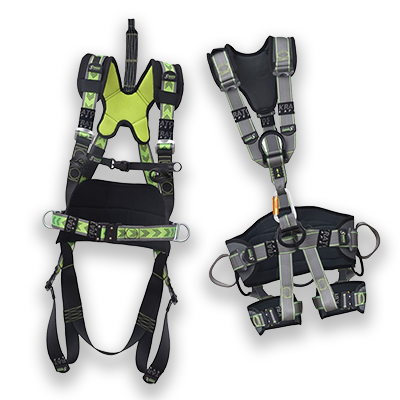
Safety Harnesses for Lift Work: Choosing and Using the Right Equipment
Lift shafts and machinery spaces can present serious risks when maintenance, inspection or installation work is carried out at height. A suitable safety harness may form part of a fall-protection system, but it is not a substitute for safe access, proper planning or competent work. The right equipment depends on the task, the lift design and the risks identified.
When might a safety harness be needed?
Harnesses may be used by trained lift engineers working in locations such as lift shafts, machine rooms or other areas where there is a risk of falling. They may be part of a fall-arrest system, which is designed to stop a person after a fall, or a work-positioning system, which helps a worker remain securely positioned while carrying out a task.
A harness is not normally required by passengers using an ordinary passenger lift. Nor should a general-purpose harness be attached to lift components or used as a means of entering or travelling in a lift. Lift work must follow the equipment manufacturer’s instructions and an appropriate safe system of work.
Choosing appropriate equipment
The harness and associated equipment should be selected for the specific job by someone with suitable knowledge. Important considerations include:
- The task and working position: determine whether the job calls for fall restraint, work positioning or fall arrest.
- Compatibility: the harness, lanyard, connectors, energy absorber and anchor point must be suitable for use together.
- Clearance and swing risk: a fall-arrest system needs enough clearance below the worker, and should be arranged to reduce the risk of swinging into the shaft or other structures.
- Fit and comfort: the harness must be the correct size, adjusted securely and worn in accordance with its instructions.
- Rescue arrangements: if a worker falls or becomes incapacitated, a prompt rescue must be possible.
Anchor points must be identified and approved for the intended use. A lift rail, bracket, machine component or other convenient-looking part should not be assumed to be a safe anchorage point.
Safe use and inspection
Before work begins, the employer or responsible contractor should assess the risks, plan the work and make sure workers are trained and competent. Where possible, risks should be avoided or reduced through safer access methods and collective protection, such as suitable guarding, before relying on personal fall-protection equipment.
Harnesses and related equipment should be checked before each use for signs of damage, wear, contamination or missing parts. Equipment should also receive the inspections required by the manufacturer and applicable regulations. Any item that has arrested a fall, or is suspected to be defective, should be taken out of service until it has been assessed by a competent person.
Workers should follow the manufacturer’s instructions for fitting, adjustment, connection, care and storage. Equipment must not be modified or repaired unless the manufacturer or a suitably competent person authorises it.
Planning for rescue
A fall-arrest harness can leave a suspended person at risk of serious harm. A rescue plan should therefore be prepared before work starts, with trained people, suitable equipment and a clear method for reaching and assisting the worker. Simply relying on the emergency services may not provide a sufficiently prompt response in every situation.
UK legal and safety responsibilities
Work involving a risk of falling is subject to UK health and safety requirements, including the Work at Height Regulations 2005. Depending on the equipment and circumstances, requirements under other legislation may also apply, including the Lifting Operations and Lifting Equipment Regulations 1998 (LOLER) and the Provision and Use of Work Equipment Regulations 1998 (PUWER).
These laws place duties on employers and those controlling work to plan it properly, use suitable equipment and ensure that workers are competent. The exact requirements depend on the circumstances, so organisations should consult current guidance and obtain advice from a competent lift-safety professional.
Make harness safety part of the whole system
A safety harness is only one element of a safe lift-work system. Correct planning, suitable anchorage, compatible equipment, training, inspection and a workable rescue plan all matter. If any of these elements is uncertain, work should not proceed until the risks have been addressed.
Essential FAQs on Safety Harness Use for Lift Work
- When is a safety harness required for lift work?
- What type of safety harness is suitable for working in a lift shaft?
- Where should a harness be attached when working on a lift?
- How should a safety harness be inspected before use?
- How often should lift safety harnesses be inspected and replaced?
- What rescue plan is needed if someone falls while wearing a harness in a lift shaft?
When is a safety harness required for lift work?
A safety harness may be required when lift work involves a risk of falling, such as during certain tasks in a lift shaft or other areas at height. The need depends on the work, the site conditions and the risk assessment; safer access methods or collective fall protection should be considered first. If a harness is needed, it must be suitable for the task, used with an approved compatible anchor point, and supported by proper training and a rescue plan.
What type of safety harness is suitable for working in a lift shaft?
The suitable harness depends on the task, the lift shaft and the fall-protection system being used. Lift engineers may need a full-body harness designed for work positioning or fall arrest, with compatible lanyards and connectors attached only to an approved anchorage point. The equipment should be selected following a risk assessment, fitted and used by trained, competent workers, and supported by a rescue plan. Always follow the manufacturer’s instructions and applicable UK work-at-height requirements; never assume a lift component is a safe anchor.
Where should a harness be attached when working on a lift?
A harness should only be attached to a designated, approved anchorage point identified in the lift’s instructions or the job’s risk assessment—not to lift rails, cables, brackets or other components unless they have been specifically approved for that purpose. The anchorage and the rest of the fall-protection system must be suitable for the task and used by a trained person. If the correct attachment point is unclear, stop work and seek advice from a competent lift-safety professional; a rescue plan should also be in place before work begins.
How should a safety harness be inspected before use?
Before each use, check the harness in good light and follow the manufacturer’s instructions. Look for cuts, fraying, worn or damaged stitching, burns, chemical contamination, corrosion, distorted buckles and any other signs of damage; check that labels are legible and all straps, fastenings and connectors work correctly. Do not use the harness if it is defective, has been involved in a fall, or you are unsure of its condition—take it out of service and have it assessed by a competent person. A pre-use check does not replace any required formal inspections.
How often should lift safety harnesses be inspected and replaced?
Lift safety harnesses should be checked by the user before each use and inspected periodically by a competent person, following the manufacturer’s instructions and any applicable workplace inspection schedule. The inspection interval depends on the equipment, how often it is used and the conditions it is exposed to; follow the manufacturer’s guidance rather than assuming one interval suits every harness. Remove a harness from service immediately if it has arrested a fall or shows damage, wear or other defects, and replace it if the manufacturer’s service life has expired or a competent person advises that it is no longer safe to use.
What rescue plan is needed if someone falls while wearing a harness in a lift shaft?
If someone falls while wearing a harness in a lift shaft, a prompt, site-specific rescue plan is essential. Before work begins, identify how the person will be reached and lowered or raised to a safe place, who will carry out the rescue, and what suitable rescue equipment and communications are needed. Trained rescuers must be available, and the plan should account for the lift’s power and isolation arrangements and any further hazards in the shaft. Do not rely solely on the emergency services or attempt an improvised rescue; follow the agreed procedure and contact emergency services where necessary.