
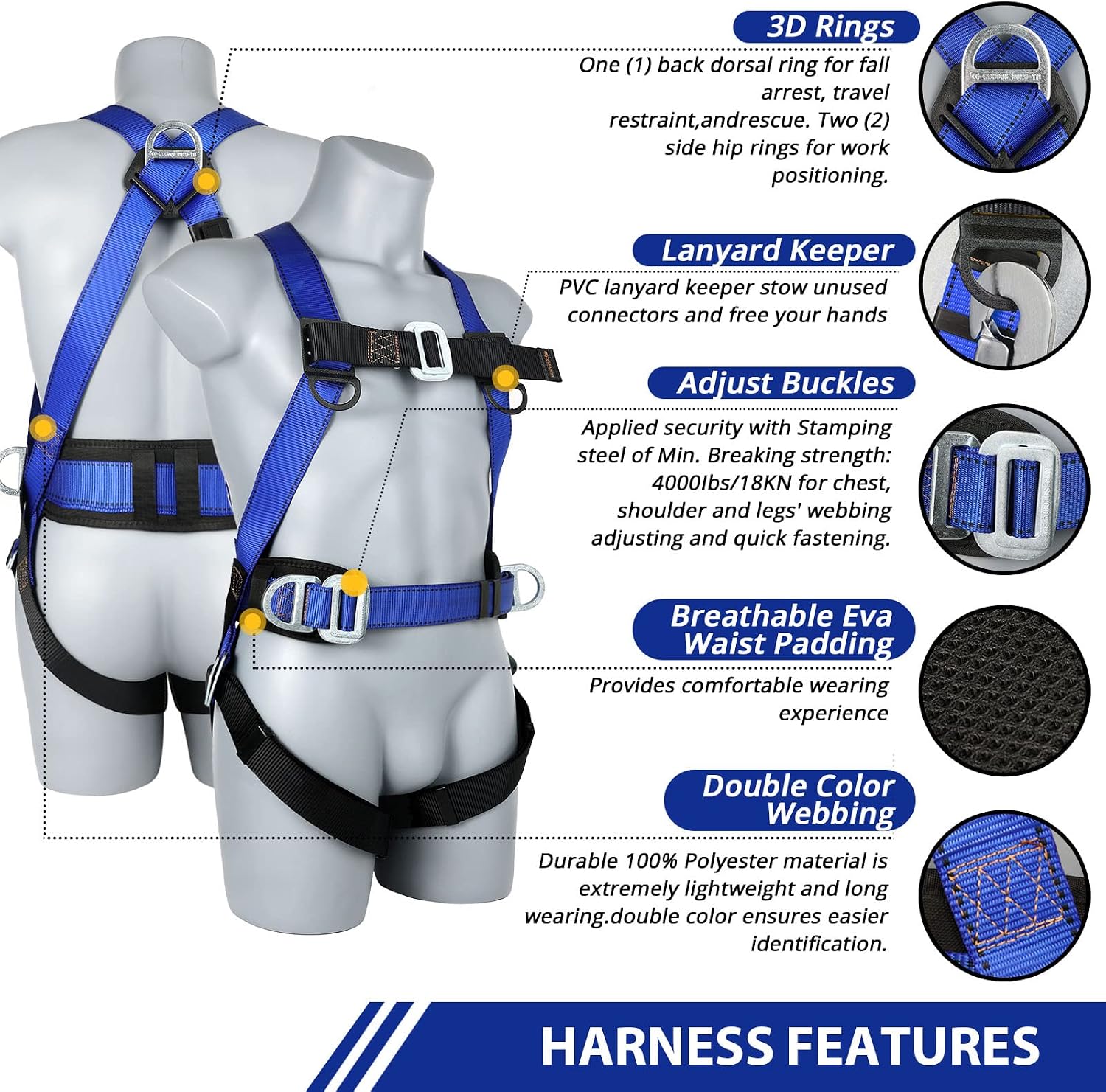
Safety Harness Webbing: Inspection, Care and Safe Use
Safety harness webbing is a vital part of a fall-protection system. It connects and supports the harness’s straps, helping to distribute forces across the wearer’s body if a fall occurs. But webbing can be damaged by wear, contamination or poor storage, and defects may not always be obvious at a glance. Regular checks and careful use are essential.
What is safety harness webbing?
Harness webbing is usually made from strong synthetic fibres, such as polyester or polyamide. It is designed to be durable and flexible while meeting the performance requirements of the harness. The exact material, construction and care instructions vary between products, so always refer to the manufacturer’s guidance.
Webbing forms the shoulder, chest, waist and leg straps of a full-body harness. It works together with other components, including buckles, adjustment devices, attachment points and stitching. The harness must be used with compatible equipment and as part of a complete fall-protection system designed for the task.
Why webbing condition matters
Damage to webbing can reduce a harness’s ability to perform as intended. A strap may look serviceable while having weakened fibres, damaged stitching or contamination that affects its strength. A harness should never be used if its condition is uncertain.
Common causes of damage include:
- cuts, tears, fraying or pulled threads;
- abrasion from sharp or rough surfaces;
- exposure to heat, sparks or open flames;
- contact with chemicals, oils, paints or solvents;
- prolonged exposure to sunlight or other environmental conditions;
- incorrect cleaning, storage or handling; and
- damage caused during a fall or other high-load event.
How to inspect harness webbing
Follow the manufacturer’s inspection instructions and your organisation’s procedures. Before each use, check the harness in good light, examining the full length of every strap and paying close attention to areas around stitching, buckles and attachment points.
Look for cuts, holes, fraying, pulled or broken stitches, discolouration, stiffness, glazing, burns, chemical damage and any change in the webbing’s texture or shape. Check that buckles and adjustment mechanisms work correctly, and confirm that labels and identification details are legible.
Pre-use checks do not replace any formal inspection or examination required by the manufacturer, workplace procedures or applicable regulations. Inspection intervals should be set by a competent person, taking account of the equipment, how often it is used and the conditions in which it is used. Keep suitable records where required.
Cleaning and storage
Clean webbing only in the way specified by the manufacturer. Some products can be cleaned with mild soap and water, but unsuitable detergents, bleach, solvents or high-temperature washing may damage the fibres. Allow the harness to dry naturally in a well-ventilated area, away from direct heat and sunlight, unless the manufacturer gives different instructions.
Store the harness clean and dry, away from chemicals, sharp objects, excessive heat and direct sunlight. Avoid leaving it loose in a vehicle or somewhere it could be crushed, contaminated or exposed to weather. Keep it in the storage bag or location recommended by the manufacturer.
When to remove a harness from service
Remove a harness from use if it is damaged, contaminated, past its stated service life, missing essential identification, or otherwise unsuitable for safe use. A harness that has arrested a fall should be taken out of service immediately, even if no damage is visible. Follow the manufacturer’s instructions about assessment, disposal or return.
Do not repair, alter, stitch, dye or modify safety harness webbing yourself. Repairs should only be carried out where the manufacturer permits them and by an authorised, competent provider.
Choose and use the right equipment
Use a harness that is suitable for the task, correctly fitted to the wearer and compatible with the other components in the system. Workers should receive appropriate instruction and training, and a safe system of work should include suitable arrangements for rescue following a fall. A harness on its own does not prevent a fall or remove the need for planning.
For specific advice, consult the harness manufacturer and a competent health and safety professional. Always follow the equipment’s instructions and relevant workplace requirements.
Essential Guide to Safety Harness Webbing: Materials, Inspection, Maintenance, and Service Life
- What materials are safety harness webbing made from?
- How do you inspect safety harness webbing for damage?
- How often should safety harness webbing be inspected?
- How should safety harness webbing be cleaned and stored?
- When should a safety harness be taken out of service?
What materials are safety harness webbing made from?
Safety harness webbing is usually made from high-strength synthetic fibres, most commonly polyester or polyamide (nylon). The material is chosen for its strength and durability, but performance can vary depending on the harness design and conditions of use. Always check the manufacturer’s specifications and care instructions, and remove the harness from service if the webbing shows signs of damage or contamination.
How do you inspect safety harness webbing for damage?
Before each use, inspect the full length of every webbing strap in good light, running it through your hands and checking both sides. Look for cuts, fraying, pulled or broken stitches, abrasion, burns, glazing, discolouration, stiffness, chemical contamination or any change in texture. Pay particular attention to areas around buckles, seams and attachment points, and check that labels are legible. If you find damage, are unsure about the harness’s condition, or know it has arrested a fall, take it out of service immediately and follow the manufacturer’s guidance; never attempt an unauthorised repair.
How often should safety harness webbing be inspected?
Safety harness webbing should be checked before every use for cuts, fraying, abrasion, damaged stitching, burns, chemical contamination and other signs of wear. It should also undergo any more detailed inspections required by the manufacturer, your organisation’s procedures and applicable regulations, carried out at the specified intervals by a competent person. If a harness has arrested a fall, or its condition is uncertain, remove it from service immediately and follow the manufacturer’s guidance.
How should safety harness webbing be cleaned and stored?
Clean safety harness webbing according to the manufacturer’s instructions, using only approved products; avoid bleach, solvents and harsh detergents, which may weaken the fibres. Allow the harness to dry naturally in a well-ventilated place, away from direct heat and sunlight. Once dry, store it clean and dry in its designated bag or storage area, away from chemicals, sharp objects, moisture, excessive heat and direct sunlight.
When should a safety harness be taken out of service?
A safety harness should be taken out of service immediately if it has arrested a fall, shows signs of damage or excessive wear, has been exposed to chemicals, heat or other conditions that could weaken the webbing, or has missing or illegible identification labels. Do not use it if its history or condition is uncertain. Follow the manufacturer’s instructions and have it assessed by a competent person; never repair or modify it yourself.