
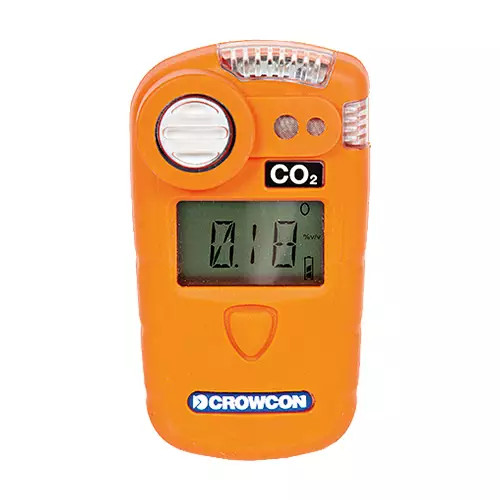
Portable Carbon Dioxide Detectors: What They Do and How to Choose One
Carbon dioxide (CO2) is a colourless, odourless gas found naturally in the air. It is also produced by people and animals, combustion, fermentation and some industrial processes. At ordinary indoor levels, it is not usually a direct health hazard, but a high concentration can cause headaches, dizziness, confusion and, in severe cases, unconsciousness or death. Because CO2 has no smell, a portable detector can provide an important warning where concentrations may rise.
What is a portable CO2 detector?
A portable CO2 detector is a battery-powered instrument that measures the gas in the surrounding air. Depending on its design, it may display a reading, sound or vibrate an alarm, or log measurements over time. Some models are intended to be carried by a person, while others are portable monitors designed to check conditions in different rooms or work areas.
Portable detectors are used in settings such as breweries, wineries, food and beverage production, laboratories, plant rooms, greenhouses, cellars and some industrial workplaces. They may also be used to investigate ventilation in occupied buildings.
CO2 monitoring for ventilation and personal safety
Not all CO2 monitors serve the same purpose. Indoor air-quality monitors commonly show CO2 levels as an indicator of how effectively a space is ventilated when people are present. They can help identify rooms that may benefit from improved airflow, but they are not necessarily designed to protect someone from a sudden, dangerous release.
A personal or workplace safety detector is intended to warn of hazardous concentrations. Before relying on any device for this purpose, check that it is designed and certified for the relevant application, has suitable alarm settings and is appropriate for the hazards in the workplace. A monitor intended only for ventilation checks should not be treated as a life-safety instrument.
How CO2 can become dangerous
High concentrations can occur when CO2 is released in a poorly ventilated space. Possible sources include compressed or liquid CO2 systems, fermentation processes, dry ice and some industrial operations. CO2 can also displace oxygen, creating an asphyxiation risk.
Although CO2 is denser than air, it should not be assumed to remain only at floor level. Air movement, temperature and the way the gas is released can affect how it spreads. A single measurement taken at one height or location may not show the conditions throughout a space.
Features to consider
- Intended use: Choose a detector designed for the difference between ventilation monitoring and personal safety monitoring.
- Sensor type and range: Check that the measuring range and sensor technology suit the environments and concentrations you need to monitor.
- Alarm options: Audible, visual and vibrating alarms can be helpful, particularly in noisy areas or where the device is carried under clothing.
- Response and display: Readings should be easy to understand, and the alarm should be suitable for the speed at which conditions could change.
- Battery life and durability: Consider operating time, charging arrangements and whether the unit is suitable for the temperature, moisture, dust or impact risks at the site.
- Data logging and connectivity: Stored readings may help with investigations, but do not replace an immediate alarm or a safe working procedure.
- Calibration and servicing: Check the manufacturer’s requirements for calibration, functional checks, sensor replacement and maintenance.
Using a detector safely
A detector is only one part of a safety system. Employers should assess the risks, control CO2 releases where possible, provide suitable ventilation and establish clear procedures for alarms and emergencies. Workers should know how to wear or position the monitor, recognise its alarms and report faults.
Follow the manufacturer’s instructions for charging, bump testing and calibration. A bump test checks that the sensor and alarms respond to gas; it does not confirm the accuracy of the reading. Keep a record of checks and remove a faulty or overdue instrument from service.
In the UK, workplace exposure limits and other requirements should be checked against current Health and Safety Executive guidance and the relevant risk assessment. Alarm settings should be selected by a competent person for the specific task and conditions, rather than copied from a different site or device.
What to do if an alarm sounds
Leave the affected area promptly and move to a safe place. Follow the site emergency procedure and alert others as instructed. Do not re-enter to investigate or attempt a rescue unless you are trained, properly equipped and authorised to do so. Contact the emergency services if needed. CO2 incidents can make an area immediately dangerous to life, including for would-be rescuers.
Choosing the right protection
A portable CO2 detector can help identify a hazard or improve understanding of ventilation, but the right device depends on why monitoring is needed. Consider the source of the gas, the space, the people who may be exposed and how quickly conditions could change. For workplace safety, seek advice from a competent occupational health and safety professional and use the detector as part of a broader risk-control plan.
Six Advantages of Using a Portable Carbon Dioxide Detector for Enhanced Safety and Efficiency
- Provides real-time CO₂ readings.
- Can alert users to rising gas levels.
- Portable for checks in different areas.
- Helps identify ventilation issues.
- Useful in workplaces with CO₂ systems.
- Supports safer risk management.
Limitations of Portable Carbon Dioxide Detectors: Calibration, Battery Life, Accuracy, and Safety Considerations
- Requires regular calibration and maintenance.
- Battery life may limit continuous use.
- Can give false alarms or inaccurate readings if faulty.
- A detector does not replace ventilation or safe working procedures.
Provides real-time CO₂ readings.
A portable carbon dioxide detector provides real-time CO₂ readings, so users can quickly see how concentrations change as they move between areas or as conditions alter. This immediate feedback can help identify a build-up early, support timely decisions about ventilation or evacuation, and give workers and building managers a clearer picture of air conditions.
Can alert users to rising gas levels.
A portable carbon dioxide detector can alert users when CO2 levels begin to rise, giving them time to leave the area or take other appropriate action before conditions become dangerous. Its audible, visual or vibrating alarm can provide an early warning, particularly in enclosed or poorly ventilated spaces where the gas cannot be seen or smelled.
Portable for checks in different areas.
A portable carbon dioxide detector can be carried from one area to another, making it easy to check CO2 levels in different rooms or workspaces. This flexibility helps users identify areas where ventilation may be inadequate or where gas could accumulate, without needing a separate fixed monitor in every location.
Helps identify ventilation issues.
A portable carbon dioxide detector can help identify ventilation issues by showing when CO2 levels are rising in an occupied space. Since people exhale CO2, persistently elevated readings may indicate that fresh air is not being supplied or circulated effectively. This can help building managers and occupants spot rooms that may need better ventilation, while remembering that CO2 readings are an indicator—not a complete measure—of indoor air quality.
Useful in workplaces with CO₂ systems.
Portable carbon dioxide detectors are particularly useful in workplaces that use CO₂ systems, such as breweries, food and drink production sites, laboratories and facilities with compressed gas cylinders. They can alert workers to a build-up or leak that may otherwise go unnoticed, helping them leave the area promptly and follow the site’s emergency procedures. As part of a wider safety plan, regular monitoring can support safer handling and use of CO₂.
Supports safer risk management.
A portable carbon dioxide detector supports safer risk management by giving users timely information about CO₂ levels in the areas they enter or work in. This can help identify rising concentrations, trigger appropriate alarms and prompt people to leave an affected space before conditions become more hazardous. Used alongside suitable ventilation, risk assessments and emergency procedures, it can help organisations make better-informed decisions and protect workers and visitors.
Requires regular calibration and maintenance.
Portable carbon dioxide detectors require regular calibration and maintenance to ensure their readings and alarms remain reliable. Calibration may need to be carried out by a competent person or specialist, while sensors, batteries and other components may need periodic checks or replacement. This adds ongoing cost and effort, and a detector that is overdue for servicing or has not been checked correctly may give inaccurate readings when it is needed most.
Battery life may limit continuous use.
Battery life can be a limitation when using a portable carbon dioxide detector for extended periods. Frequent alarms, continuous monitoring or wireless features may drain the battery more quickly, interrupting coverage if the device needs recharging or its batteries need replacing. Check the manufacturer’s stated operating time, charge or replace the battery as recommended, and keep a charged spare or backup detector available where continuous monitoring is important.
Can give false alarms or inaccurate readings if faulty.
A portable carbon dioxide detector may give false alarms or inaccurate readings if it is faulty, poorly maintained or overdue for calibration. This can cause unnecessary disruption or, more seriously, create a false sense of security if dangerous CO₂ levels go undetected. Regular checks, servicing and calibration in line with the manufacturer’s instructions help ensure the detector remains reliable.
A detector does not replace ventilation or safe working procedures.
A portable carbon dioxide detector is a useful warning device, but it does not remove CO2 from the air or prevent it from building up. It should never be treated as a substitute for effective ventilation, controlling gas releases and following safe working procedures. If an alarm sounds, people must follow the site’s emergency plan and leave the area as instructed; relying on the detector alone can create a false sense of security.