
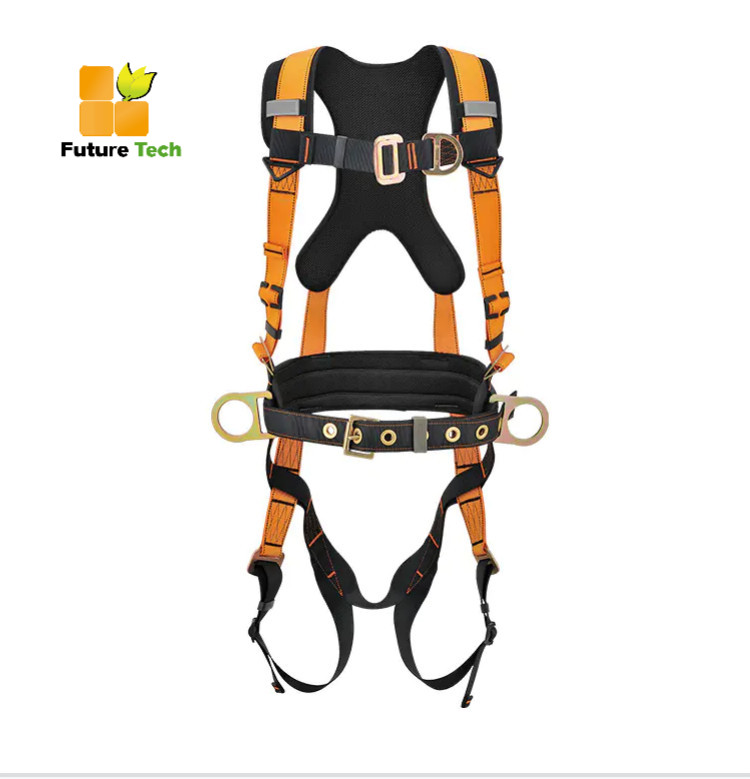
The Importance of D-Ring in Safety Harnesses
Safety harnesses are essential equipment for individuals working at heights or in hazardous environments. One crucial component of a safety harness is the D-ring, which plays a vital role in ensuring the user’s safety.
The D-ring, typically located at the back of the harness between the shoulder blades, serves as an attachment point for connecting the harness to a lanyard or lifeline. This connection is critical in preventing falls and providing support in case of an emergency.
When properly used, the D-ring distributes the force of a fall across the wearer’s body, reducing the risk of injury. It is designed to withstand significant loads and is tested to meet stringent safety standards to ensure its reliability in protecting workers at height.
It is important for users to inspect their safety harnesses regularly, including checking the condition of the D-ring. Any signs of wear or damage to the D-ring should be addressed immediately to maintain the integrity and effectiveness of the harness.
Employers have a responsibility to provide workers with properly maintained safety harnesses that include secure and functional D-rings. Training on how to correctly use and inspect safety harnesses should also be provided to ensure that workers are equipped with the knowledge and skills needed to stay safe while working at heights.
In conclusion, the D-ring is a crucial component of a safety harness that plays a key role in protecting individuals working at heights. By understanding its importance and ensuring proper usage and maintenance, we can help prevent accidents and injuries in hazardous work environments.
Understanding D-Rings: Placement, Purpose, and Usage in Safety Harnesses
- Where should the D-ring be on a harness?
- How many D rings are in a safety harness?
- What is the D-ring on a safety harness used for?
- What is a D-ring used for?
- Where should the D-ring be placed on a safety harness?
- What is the purpose of the front D-ring?
Where should the D-ring be on a harness?
When it comes to the placement of the D-ring on a safety harness, it is essential for it to be positioned correctly to ensure maximum safety and effectiveness. The D-ring is typically located at the back of the harness between the shoulder blades. This strategic placement allows for optimal distribution of force in the event of a fall, reducing the risk of injury and providing crucial support to the wearer. Ensuring that the D-ring is properly positioned and securely attached is vital in maintaining a safe working environment for individuals at height or in hazardous conditions.
How many D rings are in a safety harness?
In a standard safety harness, there are typically two D-rings included for attachment points. These D-rings are strategically positioned on the harness – one at the back between the shoulder blades and another at the front around the sternum area. The dual D-ring design allows for versatility in connecting lanyards, lifelines, or other safety equipment, providing users with options for securing themselves while working at heights or in potentially dangerous environments. It is important to familiarise oneself with the locations and functions of these D-rings to ensure proper usage and maximum safety benefits while wearing a safety harness.
What is the D-ring on a safety harness used for?
The D-ring on a safety harness serves as a vital attachment point for connecting the harness to a lanyard or lifeline. Positioned typically at the back of the harness between the shoulder blades, the D-ring plays a crucial role in preventing falls and providing support in case of emergencies. By securely attaching the lanyard to the D-ring, users can work at heights with confidence, knowing that they have a reliable connection that distributes forces evenly in the event of a fall. Regular inspection and maintenance of the D-ring are essential to ensure its functionality and effectiveness in keeping workers safe while working at heights or in hazardous environments.
What is a D-ring used for?
A D-ring, commonly found on safety harnesses, serves as a crucial attachment point for connecting the harness to a lanyard or lifeline. This connection is essential in ensuring the safety of individuals working at heights or in hazardous environments. The D-ring is strategically positioned at the back of the harness between the shoulder blades to distribute the force of a fall across the wearer’s body, reducing the risk of injury. By securely fastening a lanyard to the D-ring, users can prevent falls and receive necessary support in case of emergencies. Regular inspection and maintenance of the D-ring are imperative to ensure its functionality and reliability in safeguarding workers during their tasks.
Where should the D-ring be placed on a safety harness?
When it comes to the placement of the D-ring on a safety harness, it is crucial to ensure that it is positioned correctly for optimal safety and functionality. The D-ring is typically located at the back of the harness between the shoulder blades. This positioning allows for proper distribution of force in the event of a fall, reducing the risk of injury to the wearer. It is important to follow manufacturer guidelines and adjust the harness to ensure that the D-ring sits securely in place. Proper placement of the D-ring is essential for connecting to a lanyard or lifeline effectively, providing crucial support and protection for individuals working at heights or in hazardous environments.
What is the purpose of the front D-ring?
The front D-ring on a safety harness serves a specific and important purpose in certain work scenarios. While the back D-ring is typically used as the primary attachment point for connecting to a lanyard or lifeline, the front D-ring offers additional versatility. It allows users to attach tools or equipment directly to the harness, keeping essential items within easy reach while working at height. This can improve efficiency and safety by reducing the need for workers to carry tools separately or make frequent trips up and down a ladder or structure. When used correctly, the front D-ring enhances convenience and productivity for individuals performing tasks that require frequent access to equipment while ensuring that they remain securely connected to their harness at all times.