
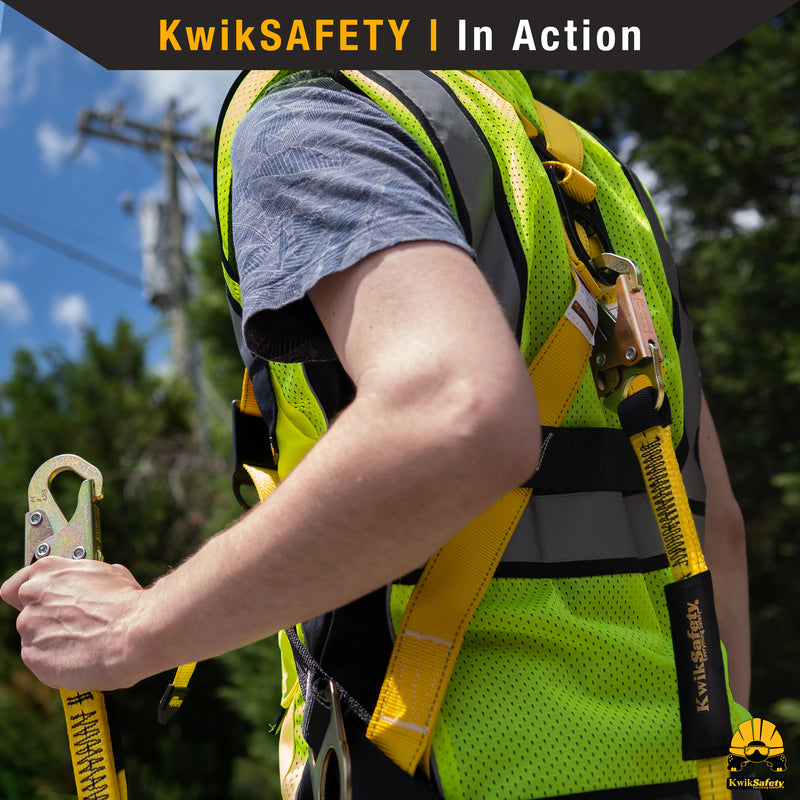
KwikSafety Fall Protection Full Body Safety Harness: A Guide to Choosing and Using One
Working at height calls for carefully selected equipment and thorough planning. A full body safety harness is an important part of a personal fall protection system, helping to distribute forces across the body if a worker falls. If you are considering a KwikSafety fall protection full body safety harness, check the specific model’s instructions and technical information to make sure it is suitable for the task and compatible with the rest of your equipment.
What is a full body safety harness?
A full body harness fits around the wearer’s shoulders, chest, waist and legs. When correctly fitted and connected to a suitable fall protection system, it is designed to restrain the wearer and help manage the forces involved in a fall. A harness is not a complete system on its own: it must be used with compatible components, such as a suitable lanyard or self-retracting device, connectors and an appropriate anchorage.
Choosing the right harness
Before buying or using a KwikSafety harness, identify the work being carried out and the type of protection required. Fall arrest, work positioning and restraint are different applications, and equipment intended for one may not be suitable for another. Always check the manufacturer’s product information for the exact model, including its intended use, size range, adjustment features, attachment points and compatibility requirements.
Also consider whether the harness can be fitted securely over the clothing and equipment worn on site. It should allow the wearer to move as required without being so loose that it could slip out of position. If several people will use the equipment, check the manufacturer’s guidance on sizing, fitting and sharing.
Fitting and inspection
Read the instructions supplied with the harness before use, and make sure each wearer has been shown how to put it on and adjust it. Straps should be untwisted, buckles correctly fastened and adjustments made so the harness sits securely. Follow the manufacturer’s fitting procedure rather than relying on appearance alone.
Inspect the harness before every use. Look for cuts, fraying, abrasion, damaged stitching, corrosion, distorted metal parts, faulty buckles, chemical contamination or any other signs of wear. Check the product label is legible and that the equipment remains within its inspection and service requirements. If there is damage, uncertainty about its condition, or a fall has occurred, remove it from service and follow the manufacturer’s instructions. Do not attempt an unauthorised repair.
Plan the whole fall protection system
A harness must be connected to suitable, compatible equipment and a secure anchorage selected for the work. Before starting, assess the risk of a fall, check for hazards below and around the work area, and ensure there is sufficient clearance to prevent the wearer from striking the ground or an obstruction. A rescue plan is also essential: a person suspended in a harness needs prompt assistance. Workers should know how to raise the alarm and what steps to take if a fall occurs.
Training and UK safety requirements
Using fall protection equipment safely requires appropriate instruction, supervision and competence. Employers should assess the risks, select suitable equipment, arrange regular inspections and make sure users understand its limitations. Check the documentation for the specific KwikSafety model to confirm its applicable standards and certification; do not assume that every model has identical specifications or approvals.
A full body safety harness can contribute to safer work at height when it is selected, fitted, inspected and used correctly as part of a complete system. Always follow the manufacturer’s instructions and seek advice from a competent person if you are unsure whether a particular KwikSafety harness is suitable for your work.
8 Essential Tips for Using Kwiksafety Full Body Safety Harnesses
- Read the Kwiksafety harness instructions before use.
- Check webbing, stitching, buckles and labels for damage or wear.
- Fit the harness snugly and adjust every strap before working.
- Use only compatible connectors and approved anchor points.
- Check the anchor point and fall-clearance distance for each job.
- Keep the harness clear of sharp edges and hazardous chemicals.
- Get proper training in fitting, inspection and fall protection.
- Remove the harness from service after a fall or if it is damaged.
Read the Kwiksafety harness instructions before use.
Read the KwikSafety harness instructions before use to understand how to fit, adjust and inspect your specific model. The guidance explains how the harness should be worn and connected to compatible equipment, helping ensure it is suitable for the task. If anything is unclear, ask a competent person for advice before working at height.
Check webbing, stitching, buckles and labels for damage or wear.
Before each use, inspect the KwikSafety full body safety harness carefully for signs of damage or wear. Check the webbing for cuts, fraying or abrasion; examine the stitching for loose, broken or pulled threads; and make sure buckles are secure and free from distortion or corrosion. Confirm that labels are legible so the harness can be identified and its instructions checked. If anything is damaged, unclear or questionable, do not use the harness—remove it from service and follow the manufacturer’s guidance.
Fit the harness snugly and adjust every strap before working.
Before starting work, put on the KwikSafety full body safety harness and adjust every strap so it fits snugly and securely, following the manufacturer’s instructions. Check that the straps are untwisted, buckles are fastened correctly and the harness does not restrict movement or sit too loosely. Ask a trained colleague to check the fit if needed, and never work at height in a harness that has not been properly adjusted.
Use only compatible connectors and approved anchor points.
Use only connectors that are compatible with your KwikSafety full body harness and the other parts of your fall protection system. Check the manufacturer’s instructions to confirm that connectors are suitable, correctly rated and able to close and lock securely. Attach the system only to an approved anchor point selected for the task; an unsuitable anchor or mismatched connector could fail or disconnect during a fall. If you are unsure, stop work and seek guidance from a competent person.
Check the anchor point and fall-clearance distance for each job.
Before each job, check that the anchor point is suitable, secure and compatible with the harness and connecting equipment, following the manufacturer’s instructions and workplace risk assessment. Measure the available fall-clearance distance, taking account of the lanyard or device, the worker’s height and any potential stretch or movement in the system. Make sure there is enough clear space below to prevent the worker from striking the ground or an obstruction, and choose another arrangement if the anchor point or clearance is not adequate.
Keep the harness clear of sharp edges and hazardous chemicals.
Keep a KwikSafety full body safety harness away from sharp edges, which can cut or abrade the webbing, and hazardous chemicals that may weaken its materials or damage its stitching and fittings. Route straps and connectors carefully to avoid contact during use, and store the harness in a clean, dry place away from chemical products. Inspect it before each use; if it has been cut, contaminated or exposed to substances that could cause damage, remove it from service and follow the manufacturer’s guidance.
Get proper training in fitting, inspection and fall protection.
Proper training is essential when using a KwikSafety fall protection full body safety harness. Make sure users know how to fit and adjust the harness correctly, inspect it for wear or damage before each use, and connect it to compatible equipment and a suitable anchorage. Training should also cover the limits of the equipment, safe working procedures and what to do in an emergency, including how to arrange a prompt rescue after a fall. Always follow the instructions for the specific harness model and seek guidance from a competent person if anything is unclear.
Remove the harness from service after a fall or if it is damaged.
Remove a KwikSafety full body safety harness from service immediately if it has arrested a fall or shows any signs of damage, such as frayed webbing, torn stitching, corrosion or faulty buckles. Do not use it again or attempt to repair it unless the manufacturer explicitly authorises this. Follow the manufacturer’s guidance on inspection, return or disposal, and use a suitable replacement so work at height can be carried out safely.