
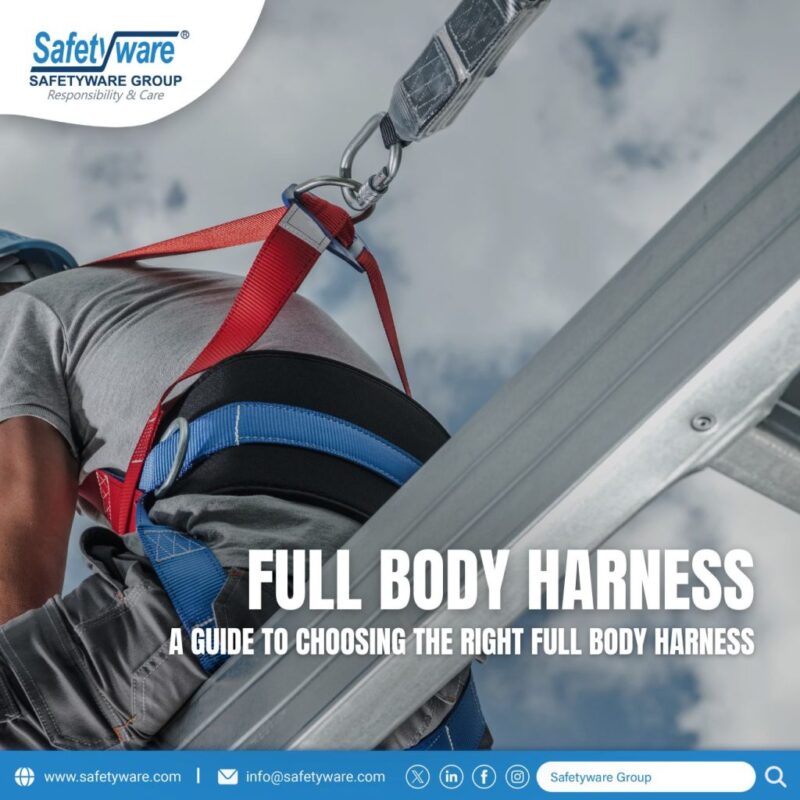
How to Choose the Best Full Body Harness
The best full body harness is not necessarily the most expensive or feature-rich model. It is the one that is suitable for the task, fits the wearer correctly and works safely with the rest of the fall-protection system. A harness must also be compatible with the user’s working environment and meet the relevant requirements for its intended use.
Whether you are working on a construction site, carrying out maintenance or accessing a roof, choosing carefully can make a significant difference to safety and comfort. This guide explains what to look for when selecting a full body harness in the UK.
What is a full body harness?
A full body harness is worn around the torso and legs and is designed to distribute the forces of a fall across the body. In a fall-arrest system, it connects the wearer to other equipment, such as a lanyard or self-retracting lifeline, which is attached to a suitable anchor point.
A harness on its own does not prevent a fall or make a work-at-height task safe. The complete system must be planned and used correctly, with appropriate equipment, a suitable anchor and a rescue plan.
Start with the task
Before comparing models, identify what the harness will be used for. Consider:
- The type of work: for example, restraint, work positioning, climbing or fall arrest.
- The working environment: including weather, heat, dirt, sharp edges and potential chemical exposure.
- The equipment it must connect to: such as a lanyard, lifeline or work-positioning system.
- The duration of use: longer tasks may call for more padding and adjustment options.
- The wearer: body size, clothing and any tools or equipment that will be carried.
Where possible, work at height should be avoided or carried out using collective protection, such as guard rails or properly selected access equipment. Personal fall-protection equipment should be chosen as part of a task-specific risk assessment.
Check the relevant standard
For fall-arrest harnesses, look for a product designed and marked to the relevant standard, commonly BS EN 361. Other standards may apply to additional functions. For example, harnesses used for work positioning or restraint may include components covered by BS EN 358, while rescue harnesses may be covered by BS EN 1497.
Standards and product requirements can vary depending on the intended use. Check the manufacturer’s instructions and product markings, and seek advice from a competent person if it is not clear that a harness is suitable for the task.
Choose the right attachment points
Full body harnesses may have a dorsal attachment point on the back, a sternal point on the front, or both. Some models also have side attachment points for work positioning. These points are not interchangeable: each is intended for particular uses and must be used in accordance with the manufacturer’s instructions.
Check that the attachment point on the harness is compatible with the rest of the system. The system should be selected to minimise fall distance and reduce the risk of striking the ground or an obstruction. Allow for the equipment’s deployment distance, the wearer’s position and any required safety clearance.
Prioritise fit and comfort
A correctly fitted harness should be secure without restricting movement or breathing. Look for straps that can be adjusted to fit the wearer and clothing, with buckles that are easy to fasten and check. Leg and chest straps should be positioned and tightened as instructed by the manufacturer.
Padding, breathable materials and practical adjustment can improve comfort during longer tasks. However, comfort features should never take priority over correct fit, suitability and compatibility. Each wearer should be shown how to put on and adjust the harness, and the fit should be checked before use.
Consider practical features
Depending on the work, useful features may include easy-to-identify attachment points, quick-connect buckles, adjustment indicators, tool loops or a design that can be worn over protective clothing. Choose features that support the job rather than adding unnecessary complexity.
Check the harness’s weight limit and any restrictions on accessories or equipment carried by the wearer. Never modify the harness or add components unless the manufacturer confirms that they are compatible.
Inspect, maintain and store it correctly
Inspect the harness before each use, following the manufacturer’s instructions and the organisation’s inspection procedures. Look for damage such as cuts, fraying, worn stitching, corrosion, deformation, contamination or malfunctioning buckles. Check labels and markings are present and readable.
Any harness that has arrested a fall, is damaged or has an uncertain history should be taken out of service and dealt with according to the manufacturer’s guidance. Do not attempt repairs unless authorised by the manufacturer. Keep records of thorough examinations where required, and store the harness clean and dry, away from sunlight, chemicals and sharp objects.
Training and rescue planning matter
Workers need suitable instruction and practical training in fitting, adjustment, inspection and use of the complete system. They should also understand the limitations of the equipment and what to do if a fall occurs.
Suspension after a fall can be a serious emergency. A rescue plan should be in place before work begins, with suitable equipment and trained people available to carry it out promptly. Calling the emergency services should not be the only planned rescue arrangement.
So, what is the best full body harness?
The best full body harness is one that:
- is designed and marked for the intended task;
- meets the relevant standard for its use;
- fits the wearer and can be adjusted correctly;
- is compatible with the complete fall-protection system;
- can be inspected, maintained and stored as instructed; and
- is used by someone who is trained and supported by a suitable rescue plan.
There is no single harness that is best for every person or job. Base the choice on a competent assessment of the task, the user and the equipment system, and follow the manufacturer’s instructions and applicable UK health and safety requirements.
Essential Tips for Choosing and Using a Full Body Harness Safely
- Choose a harness certified to the relevant UK or European safety standard.
- Get a proper fit
- Match the harness to the task, fall-arrest system and attachment points.
- Check labels, stitching, buckles and webbing before every use.
- Retire it after a fall, damage or if its history is unclear.
- Get training and plan a prompt rescue before working at height.
Choose a harness certified to the relevant UK or European safety standard.
Choose a full body harness certified to the safety standard relevant to its intended use. For fall-arrest harnesses, look for compliance with BS EN 361, and check the product label and manufacturer’s instructions to confirm it is suitable for the task. Certification alone does not guarantee safety: the harness must also fit correctly, be compatible with the rest of the fall-protection system, and be inspected and used as instructed.
Get a proper fit
A full body harness must fit the wearer properly to work as intended. Choose a size that suits the person and allows adjustment over the clothing they will wear on the job. Fasten and tighten every strap according to the manufacturer’s instructions: the harness should feel secure without restricting movement or breathing, and straps should not be twisted or left loose. Check the fit before each use, and make sure every wearer knows how to put on and adjust their own harness.
Match the harness to the task, fall-arrest system and attachment points.
Choose a full body harness that is designed for the specific task and compatible with the complete fall-arrest system, including the lanyard or lifeline and anchor point. Check that the harness’s attachment points are suitable for the intended use, as front, rear and side points may serve different purposes. Always follow the manufacturer’s instructions and make sure the system is correctly set up to limit fall distance and prevent the wearer from striking the ground or nearby obstacles.
Check labels, stitching, buckles and webbing before every use.
Before every use, inspect the harness carefully to make sure it is safe to wear. Check that labels are present and readable, stitching is intact, buckles fasten and release correctly, and webbing has no cuts, fraying, burns, chemical damage or other signs of wear. If you find any damage or are unsure about the harness’s condition, take it out of service and follow the manufacturer’s guidance.
Retire it after a fall, damage or if its history is unclear.
Retire a full body harness immediately if it has arrested a fall, shows signs of damage or wear, or has an unclear history. Even if damage is not visible, a fall can place excessive force on the harness and weaken it. Remove it from service, clearly mark it so it cannot be used accidentally, and follow the manufacturer’s guidance on inspection and disposal. Never put it back into use unless a competent person has confirmed that this is permitted.
Get training and plan a prompt rescue before working at height.
Before working at height, make sure everyone using a full body harness has suitable training in fitting, adjustment, inspection and safe use. Plan a prompt rescue in advance, with the right equipment and trained people ready to respond if a fall occurs. Do not rely solely on the emergency services: suspension after a fall can quickly become life-threatening, so a clear, practiced rescue plan is essential.