
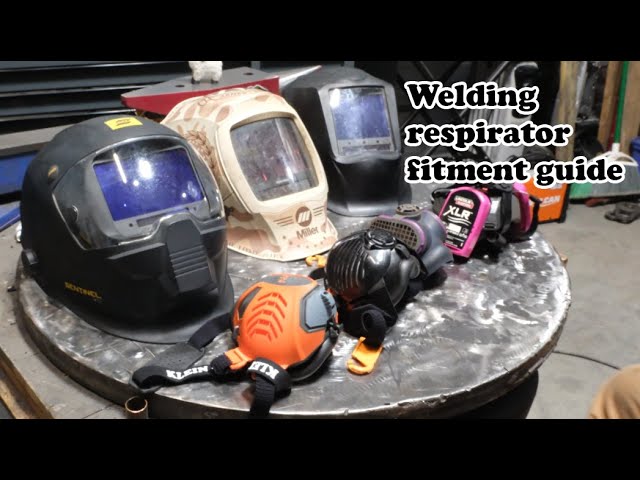
Using a Respirator Under a Welding Helmet
Welding produces fumes and gases that can harm your health. A welding helmet protects your face and eyes from the arc, heat and sparks, but it does not automatically protect you from breathing in hazardous substances. In some situations, a respirator may be needed as part of a wider plan to control exposure.
Control the fume first
Respiratory protective equipment (RPE) should not be the first or only control. In the UK, employers must assess and control exposure to hazardous substances under the Control of Substances Hazardous to Health Regulations (COSHH). Suitable measures may include removing coatings safely, using local exhaust ventilation (LEV) to capture fumes at source, and improving general ventilation.
Welding fume can contain a mixture of metals and other harmful substances, depending on the process, base material, filler and any surface coatings. The right controls therefore depend on the job. RPE may be required where exposure cannot be adequately controlled by other measures, or for particular tasks and locations.
Types of respirator used with welding helmets
Common options include:
- Powered air-purifying respirators (PAPRs): A motorised unit draws air through a filter and supplies it to a compatible welding helmet or headtop. This can be a practical option for long tasks, but the complete system must be approved for the intended use.
- Disposable or reusable filtering facepieces: These may sometimes be worn under a helmet, provided the helmet and respirator fit together without gaps, pressure points or interference. They must be suitable for the hazard and task.
- Reusable half-mask respirators: These can be used with some welding helmets, but the combination needs to allow a reliable face seal and comfortable movement. A tight-fitting mask may not be suitable if the helmet disrupts its seal.
A welding helmet with an integrated or compatible powered respirator system can help avoid problems caused by trying to combine separate items. Always follow the manufacturers’ instructions for both the helmet and the respirator.
Choosing the right protection
The correct respirator depends on the substances present, how much fume is generated, the work environment and the length of exposure. A particulate filter may help protect against welding particles, but it will not necessarily protect against gases or vapours. Some processes, coatings and confined-space tasks can create additional hazards that require specialist assessment.
Air-purifying respirators do not supply oxygen. They must not be used in oxygen-deficient atmospheres or where the hazard is unknown or immediately dangerous. Such situations require a different, properly assessed breathing-air solution and trained personnel.
Fit, compatibility and maintenance
For a tight-fitting respirator to work, it must seal closely to the face. In the UK, workers using tight-fitting RPE need a suitable fit test for the specific make, model, type and size of facepiece. Facial hair in the seal area can prevent a reliable fit. A loose-fitting powered hood does not rely on a face seal, but it still needs to be selected and worn correctly.
Before welding, check that:
- the respirator and helmet are designed to work together;
- the face seal, visor and headgear are not displaced when the helmet is lowered or adjusted;
- airflow is sufficient and any alarms or indicators are working;
- filters are the correct type, in date and fitted correctly; and
- the equipment is clean, maintained and stored as the manufacturer directs.
Replace filters in line with the manufacturer’s instructions and your workplace procedures. Do not continue working if a powered unit signals low airflow, becomes damaged or stops working.
Comfort and practical considerations
A respirator worn under a welding helmet can become uncomfortable, especially during long shifts or in hot conditions. Poorly matched equipment may restrict movement, fog the visor, press against the face or interfere with the helmet’s position. These problems can lead to workers adjusting or removing their RPE, so equipment should be selected with the wearer involved and checked during the actual task.
In summary
A respirator under a welding helmet can provide important protection when it is properly selected, compatible and maintained. It does not replace effective fume controls such as LEV. Employers should assess the risks, provide suitable equipment and training, and ensure that workers know how to use and check it. When in doubt, seek advice from a competent occupational hygiene or respiratory-protection professional.
Essential FAQs About Wearing Respirators Under Welding Helmets
- Can you wear a respirator under a welding helmet?
- What type of respirator is best for wearing with a welding helmet?
- Will a respirator fit properly under my welding helmet?
- Can I wear a disposable FFP3 mask under a welding helmet?
- Is a powered air-purifying respirator (PAPR) better for welding?
- Does a welding helmet protect me from welding fumes?
- How can I prevent my respirator from interfering with my helmet’s fit?
- Do I need a fit test for a respirator worn under a welding helmet?
- How often should I replace or maintain my welding respirator filters?
Can you wear a respirator under a welding helmet?
Yes, you can wear a respirator under a welding helmet, provided the two are compatible and the respirator remains correctly fitted and effective when the helmet is lowered. Choose RPE suitable for the specific welding fumes and task, and follow the manufacturers’ instructions. Tight-fitting respirators must be fit-tested, while powered respirators should be checked for adequate airflow. A respirator is not a substitute for effective fume controls, such as local exhaust ventilation.
What type of respirator is best for wearing with a welding helmet?
The best respirator depends on the welding process, materials and level of fume exposure, so there is no single option for every job. A powered air-purifying respirator (PAPR) designed to work with a welding helmet is often a practical choice, as it supplies filtered air through a compatible headtop. A tight-fitting respirator may also be suitable, but it must fit securely beneath the helmet and pass a face-fit test. Choose RPE following a suitable risk assessment, and remember that it should complement—not replace—effective fume extraction and ventilation.
Will a respirator fit properly under my welding helmet?
A respirator may fit under a welding helmet, but it depends on the design and compatibility of both items. Check the manufacturers’ guidance and make sure the respirator stays correctly positioned when the helmet is lowered, without disturbing its seal, blocking airflow or restricting movement. Tight-fitting respirators should be fit-tested for the wearer and specific model. If the equipment feels uncomfortable or shifts during use, ask a competent safety professional to help find a suitable combination.
Can I wear a disposable FFP3 mask under a welding helmet?
Yes, you may be able to wear a disposable FFP3 mask under a welding helmet, but only if it is suitable for the welding fume and fits correctly without the helmet disturbing its seal or causing discomfort. Tight-fitting masks require a face-fit test for the specific make and model, and facial hair can prevent an effective seal. An FFP3 mask filters particles, but it does not protect against gases or vapours, so it may not be suitable for every welding task. Follow your employer’s COSHH risk assessment and the manufacturers’ instructions, and use effective fume controls such as local exhaust ventilation wherever possible.
Is a powered air-purifying respirator (PAPR) better for welding?
A powered air-purifying respirator (PAPR) can be a good choice for welding, particularly for long tasks or where a tight-fitting mask is difficult to wear, as it supplies filtered air through a compatible helmet or headtop. However, it is not automatically the best option for every job: the system must be suitable for the specific fumes and conditions, correctly fitted and maintained, and used alongside effective fume controls such as local exhaust ventilation. PAPRs do not supply oxygen, so they must not be used in oxygen-deficient or unknown atmospheres. Check that the PAPR and welding helmet are designed to work together, and follow the manufacturers’ instructions and your workplace risk assessment.
Does a welding helmet protect me from welding fumes?
No. A welding helmet protects your face and eyes from the arc, heat and sparks, but it does not usually protect you from breathing in welding fumes. Fumes can contain harmful particles and gases, so use effective ventilation or fume extraction and, where a risk assessment shows it is needed, suitable respiratory protective equipment (RPE). Make sure the respirator is compatible with your helmet and properly fitted; seek advice from your employer or a competent safety professional if you are unsure.
How can I prevent my respirator from interfering with my helmet’s fit?
Choose a respirator and welding helmet designed to work together, and check the fit with both in place before starting work. Make sure the helmet sits securely, the visor moves freely and the respirator’s seal is not disturbed when you lower or adjust the helmet. If you use a tight-fitting respirator, arrange a fit test with the helmet worn as it will be on the job; facial hair or straps beneath the seal can prevent an effective fit. Don’t modify either item to make them fit—ask your supplier or a competent respiratory-protection adviser about a compatible system, such as a welding helmet with an integrated powered respirator.
Do I need a fit test for a respirator worn under a welding helmet?
Yes, if you use a tight-fitting respirator, you need a fit test for the specific make, model, type and size of facepiece. The welding helmet must not disturb the seal when it is lowered, adjusted or worn during work, so check that the two items are compatible. A loose-fitting powered respirator hood does not require a face-fit test, but it must still be suitable for the task, fit correctly and be maintained in accordance with the manufacturer’s instructions. In the UK, your employer should arrange the appropriate testing and provide training on the equipment.
How often should I replace or maintain my welding respirator filters?
Replace or maintain welding respirator filters according to the manufacturer’s instructions and your workplace risk assessment; there is no single interval that suits every filter or welding task. Check filters before each use for damage, contamination, poor fit or signs of blockage, and replace them immediately if they are damaged or the respirator’s airflow indicator or alarm shows a problem. For powered respirators, keep to the specified cleaning, servicing and battery-maintenance schedule. Never clean or reuse a filter unless the manufacturer confirms that it is designed for this, and make sure replacement filters are the correct type for the hazards present.