
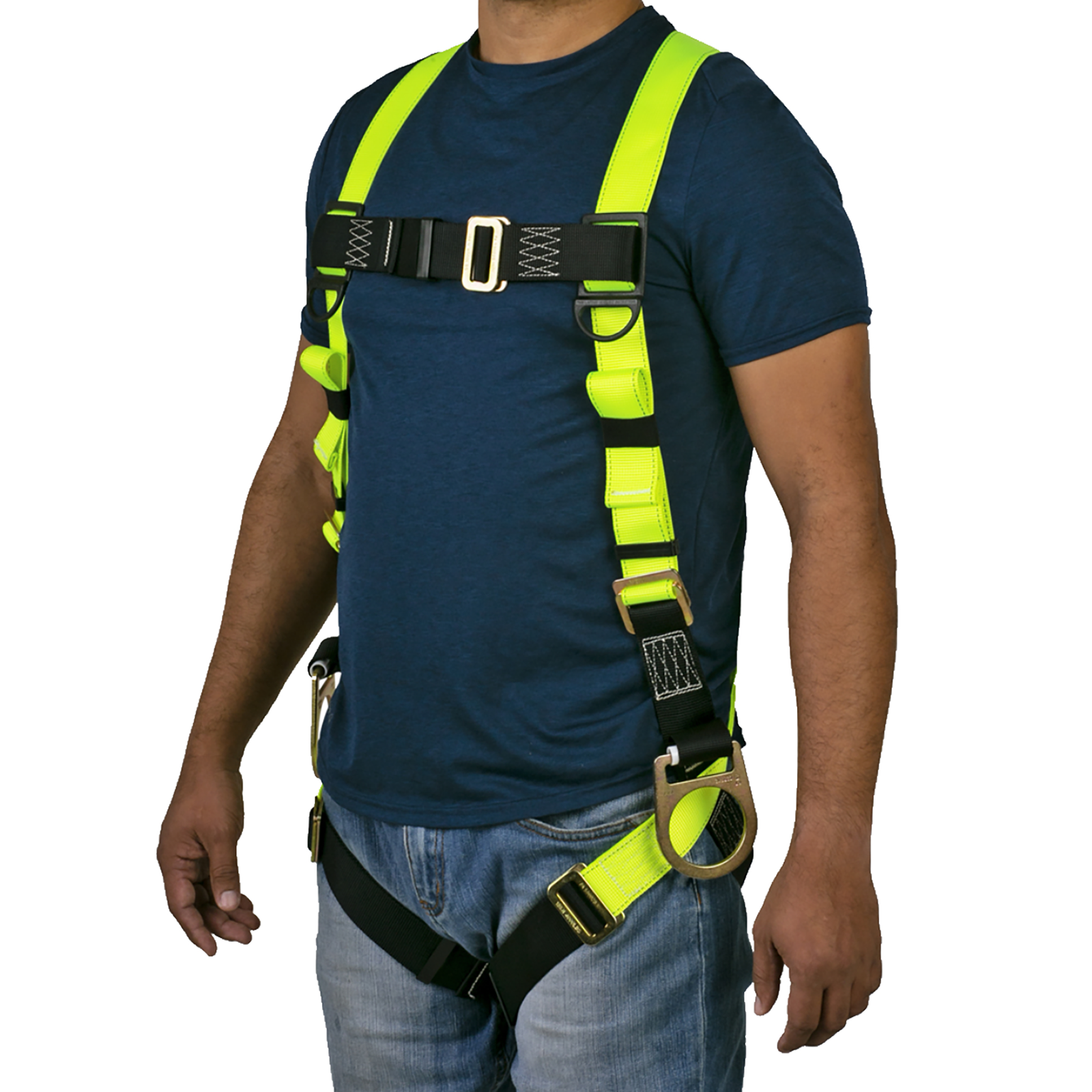
The Importance of Full Body Harness Fall Protection
Falls from heights are a significant risk in many industries, leading to serious injuries and even fatalities. To mitigate this risk, the use of proper fall protection equipment is crucial. One such essential piece of equipment is the full body harness.
A full body harness is designed to distribute fall arrest forces across the strongest parts of the body, such as the shoulders, chest, waist, and thighs. By wearing a full body harness correctly and connecting it to a reliable anchor point, workers can significantly reduce the impact of a fall and prevent free falls that could result in severe injuries.
When selecting a full body harness for fall protection, it is important to consider factors such as comfort, fit, adjustability, and compliance with relevant safety standards. A well-fitted harness that allows for freedom of movement while providing adequate support can make a difference in an emergency situation.
Training on how to properly inspect, don, and use a full body harness is essential for all workers who may be exposed to fall hazards. Regular inspection of the harness for signs of wear or damage is also crucial to ensure its effectiveness in an emergency.
Employers have a responsibility to provide appropriate fall protection equipment, including full body harnesses, and to ensure that workers are trained in their correct usage. By prioritising safety and investing in quality fall protection gear, organisations can create a safer work environment and protect their employees from potential harm.
In conclusion, full body harness fall protection plays a vital role in preventing injuries and saving lives in high-risk work environments. By understanding the importance of this equipment and following best practices for its use, workers can confidently perform their duties at heights while staying safe and secure.
Eight Benefits of Full Body Harness Fall Protection for Enhanced Safety at Heights
- Provides comprehensive protection for the entire body in case of a fall
- Distributes fall arrest forces evenly across the body to reduce impact
- Offers a secure connection to anchor points, preventing free falls
- Allows for hands-free operation while working at heights
- Adjustable straps ensure a comfortable and secure fit for different body sizes
- Complies with safety standards to ensure reliability and effectiveness
- Essential equipment for working safely at elevated levels or in high-risk environments
- Promotes confidence and peace of mind for workers knowing they are protected from fall hazards
Drawbacks of Full Body Harness Fall Protection: Key Challenges and Considerations
- Restricts movement and agility, especially in tight or confined spaces.
- Can be uncomfortable to wear for extended periods, leading to fatigue and reduced productivity.
- May require frequent adjustments to ensure proper fit, which can be time-consuming.
- In case of a fall, the impact on the body from sudden deceleration can still cause injuries.
- Full body harnesses can be bulky and cumbersome, hindering mobility and causing inconvenience.
- Workers may find it challenging to properly inspect and maintain the harness regularly.
- Initial cost of purchasing full body harnesses and associated fall protection systems can be significant.
Provides comprehensive protection for the entire body in case of a fall
Full body harness fall protection offers a crucial advantage by providing comprehensive protection for the entire body in the event of a fall. Unlike other types of fall protection equipment, such as safety belts or lanyards, a full body harness distributes the impact forces evenly across the shoulders, chest, waist, and thighs. This holistic coverage ensures that in case of a fall, the body is supported and secured from multiple angles, reducing the risk of serious injuries and enhancing overall safety for workers at height.
Distributes fall arrest forces evenly across the body to reduce impact
One significant advantage of using a full body harness for fall protection is its ability to distribute fall arrest forces evenly across the body. By spreading the impact of a fall across the shoulders, chest, waist, and thighs, the harness minimises the concentrated force on any single body part. This even distribution helps to reduce the overall impact on the body during a fall, providing greater protection to individuals working at heights.
Offers a secure connection to anchor points, preventing free falls
Full body harness fall protection offers a secure connection to anchor points, effectively preventing free falls. By ensuring that workers are properly connected to reliable anchor points at all times, the harness significantly reduces the risk of uncontrolled descents in the event of a fall. This feature provides workers with a sense of security and confidence while working at heights, knowing that they are safely tethered and protected from potentially dangerous free falls.
Allows for hands-free operation while working at heights
Full body harness fall protection offers the valuable advantage of enabling hands-free operation when working at heights. By securely attaching to a reliable anchor point, workers can have the freedom to use both hands to perform tasks without compromising their safety. This feature not only enhances efficiency and productivity but also reduces the risk of accidents caused by losing balance or grip while working at elevated levels. Hands-free operation facilitated by a full body harness ensures that workers can focus on their tasks with confidence, knowing that they are securely protected from potential falls.
Adjustable straps ensure a comfortable and secure fit for different body sizes
One significant advantage of full body harness fall protection is that its adjustable straps cater to individuals of various body sizes, ensuring a comfortable and secure fit for all users. This feature allows workers to customise the harness to their specific dimensions, promoting both comfort and safety while working at heights. By accommodating different body shapes and sizes, the harness ensures that each wearer can move freely and confidently without compromising on protection, ultimately enhancing overall workplace safety standards.
Complies with safety standards to ensure reliability and effectiveness
Ensuring that full body harness fall protection equipment complies with safety standards is a crucial factor in guaranteeing its reliability and effectiveness. By adhering to established safety regulations and standards, such as those set by regulatory bodies or industry-specific guidelines, users can have confidence in the quality and performance of the harness. Compliance with safety standards not only enhances the overall safety of workers at height but also provides assurance that the equipment has been tested and approved for its intended use, ultimately contributing to a safer work environment for all individuals involved.
Essential equipment for working safely at elevated levels or in high-risk environments
Full body harness fall protection serves as essential equipment for working safely at elevated levels or in high-risk environments. By providing a secure and reliable connection to anchor points, full body harnesses enable workers to carry out their tasks with confidence and peace of mind. Whether working on construction sites, industrial facilities, or other high-risk settings, wearing a full body harness ensures that individuals are protected in the event of a fall, reducing the risk of serious injuries or fatalities. Investing in proper fall protection gear like full body harnesses is not just a precautionary measure but a necessary step towards ensuring the safety and well-being of workers operating at heights or in hazardous conditions.
Promotes confidence and peace of mind for workers knowing they are protected from fall hazards
The use of full body harness fall protection promotes confidence and peace of mind among workers, as they know they are effectively shielded from fall hazards. By wearing a secure harness and being connected to a reliable anchor point, workers can focus on their tasks at heights without the fear of potential accidents. This sense of security not only boosts morale but also enhances productivity, creating a work environment where employees feel empowered and supported in their safety, ultimately leading to a more positive and efficient workplace culture.
Restricts movement and agility, especially in tight or confined spaces.
One drawback of utilising full body harness fall protection is that it can restrict movement and agility, particularly in tight or confined spaces. The bulkiness and design of a full body harness may limit the wearer’s ability to manoeuvre freely, which could be challenging in environments where flexibility is essential. Workers operating in cramped or restricted spaces may find it cumbersome to navigate with a full body harness on, potentially impeding their efficiency and productivity. It is crucial for employers to consider these limitations and provide alternative safety measures or equipment where necessary to ensure both safety and practicality in various work settings.
Can be uncomfortable to wear for extended periods, leading to fatigue and reduced productivity.
Wearing a full body harness for fall protection, while essential for safety, can present a significant drawback in terms of comfort when worn for extended periods. The design and structure of the harness may cause discomfort and restrict movement, leading to fatigue and decreased productivity among workers. This discomfort can be particularly challenging for individuals who need to wear the harness throughout their workday, impacting their ability to focus and perform tasks efficiently. Employers should consider providing regular breaks or ergonomic adjustments to mitigate the discomfort associated with prolonged harness use and ensure that workers can maintain optimal levels of productivity while prioritising their safety.
May require frequent adjustments to ensure proper fit, which can be time-consuming.
One drawback of using full body harness fall protection is that it may necessitate frequent adjustments to maintain a proper fit, which can be a time-consuming process. Workers may need to spend valuable time readjusting the harness to ensure it remains snug and secure, especially if they are moving around or performing tasks that put strain on the equipment. This need for regular adjustments can potentially disrupt workflow and productivity, highlighting a challenge in balancing safety requirements with operational efficiency in high-risk environments.
In case of a fall, the impact on the body from sudden deceleration can still cause injuries.
In the event of a fall, one notable drawback of full body harness fall protection is that, despite its intended safety benefits, the sudden deceleration upon impact can still result in injuries to the body. While the harness is designed to distribute forces and prevent free falls, the abrupt stop during a fall can exert significant pressure on the body, potentially causing bruises, strains, or other trauma. This con highlights the importance of not only wearing a full body harness correctly but also implementing additional safety measures and training to minimise the risk of injuries in case of a fall.
Full body harnesses can be bulky and cumbersome, hindering mobility and causing inconvenience.
Full body harnesses, while essential for fall protection, can present a significant drawback due to their bulky and cumbersome nature. The added bulk of a full body harness can restrict movement and hinder mobility for workers, making tasks more challenging and potentially slowing down productivity. Additionally, the weight and design of the harness can cause discomfort and inconvenience for users, especially when worn for extended periods. Balancing the need for safety with the practicality of mobility is crucial in ensuring that full body harnesses do not impede workers’ ability to perform their duties effectively and comfortably.
Workers may find it challenging to properly inspect and maintain the harness regularly.
Workers may encounter a significant challenge in the regular inspection and maintenance of full body harnesses used for fall protection. Due to the nature of their work responsibilities and the demanding environments they operate in, finding the time and resources to thoroughly inspect and maintain harnesses can be a daunting task. Neglecting proper inspection and maintenance procedures can compromise the effectiveness of the harnesses, potentially putting workers at risk in the event of a fall. It is essential for employers to provide clear guidelines, training, and support to ensure that workers understand the importance of regular inspections and maintenance routines to uphold safety standards and protect against potential hazards.
Initial cost of purchasing full body harnesses and associated fall protection systems can be significant.
The initial cost of purchasing full body harnesses and associated fall protection systems can present a significant financial challenge for businesses and organisations. The investment required to procure high-quality harnesses and related safety equipment may strain budgets, especially for smaller companies or those operating on tight margins. This upfront expense can be a barrier to implementing comprehensive fall protection measures, potentially leaving workers at risk in hazardous environments. Balancing the need for effective safety equipment with budget constraints is a critical consideration for decision-makers tasked with ensuring workplace safety.